
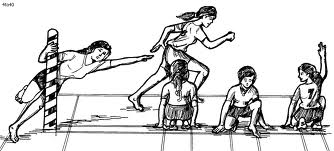
Kho kho is one of India’s oldest traditional sports, played for generations in villages and schools long before it had a rulebook. It has changed shape considerably in the last few years, first through the franchise-based Ultimate Kho Kho league and then through the rules set for the 2025 Kho Kho World Cup, held in India and organised with the International Kho Kho Federation. The chasing and dodging that make up the game are unchanged, but the timings, scoring and a few key rules have been modernised.
Objective
One team defends while the other chases. The chasing side, called attackers, tries to touch or put out every defender before time runs out; the defending side tries to stay on the field for as long as possible without being caught.
Rules and regulations
- A match is played in two innings, and each team gets a turn at chasing and a turn at defending within an inning.
- Under the current World Cup and Ultimate Kho Kho format, each turn lasts seven minutes, shorter than the nine minutes once standard in traditional kho kho.
- Attackers sit in a row facing alternate directions along the central lane and can only change direction by touching a pole at either end of the lane or by receiving a “kho” from a teammate, a verbal handover combined with a touch.
- One attacker, known as the Wazir, is allowed to move and change direction more freely than the rest, adding an extra attacking option.
- Defenders enter the field in batches rather than all at once, and a team’s turn ends either when every defender in play has been put out or when the time limit is reached.
- Kho Kho Federation of India is the recognised national body overseeing the domestic game, while the International Kho Kho Federation coordinates the sport’s international rules and competitions.
Equipment and playing area
- The playing surface is a rectangular mat, with the World Cup format using a smaller court than the traditional 27 by 16 metre field to keep the pace quick.
- A central lane runs down the middle, crossed by marked lanes at intervals, and a pole stands at each end for attackers to turn around.
- No sticks, balls or protective padding are used; the game relies entirely on running, dodging and quick reflexes, and players usually wear simple sportswear and turf shoes.
Scoring
- Attackers earn points for every defender they put out, with a bonus if a defender is caught diving for or around a pole.
- Defenders, in turn, earn points for lasting a set minimum time on the field without being caught, a reward known as a “dream run.” Whichever team has more points once both innings are complete wins the match.