
By Rakesh Jha
Mohammed Shami has ended his Test career on the anniversary of his debut, with 229 wickets from 64 matches and a strong feeling, outside the selection room at least, that he had more to give.
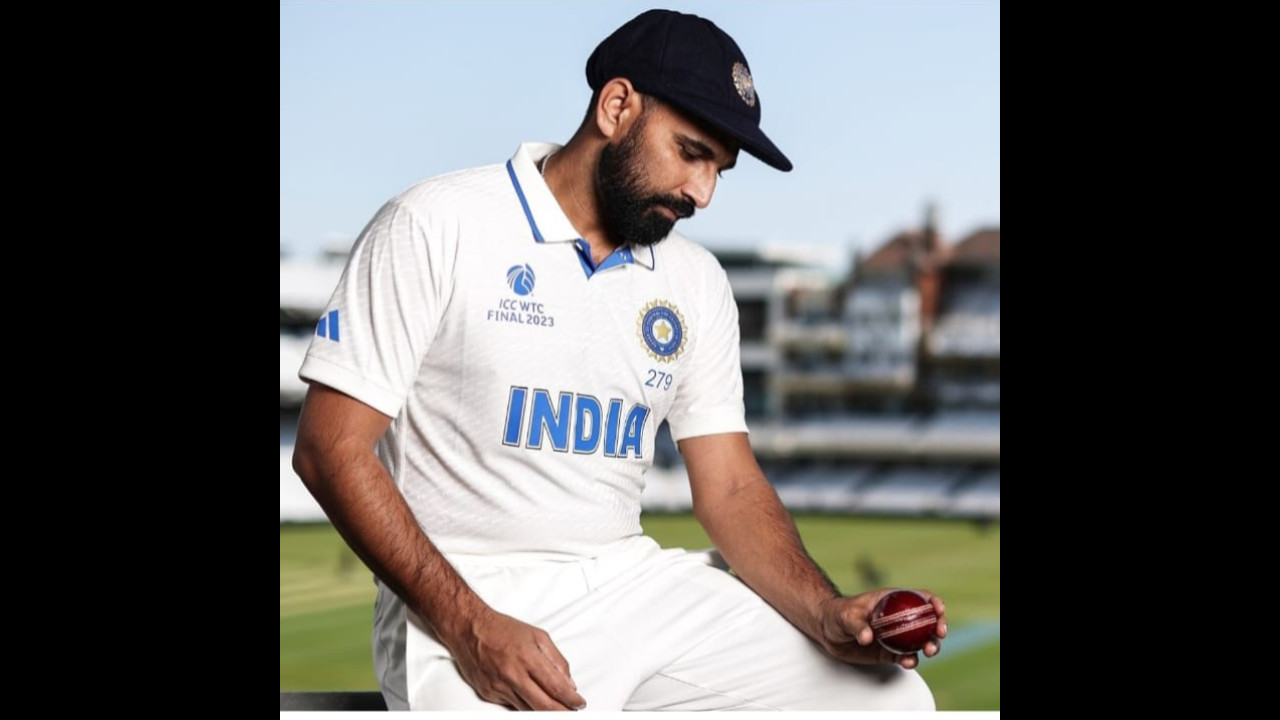
Mohammed Shami chose his date with care. He was handed his Test cap at Eden Gardens on 6 November 2013. On 6 November 2026, thirteen years to the day, he posted a video on Instagram and said goodbye to the white jersey. “I made my debut today, and today I am taking retirement,” he said.
It was a thank-you more than a complaint. He spoke about the small place he came from, about falling, getting hurt and getting injured, and about standing up again each time for the India badge. He thanked his coaches, trainers and physios, and the fans who had made his name. He has not finished with cricket. He will carry on in ODIs and T20s, and he is playing for Bengal this season.
He leaves Test cricket with 229 wickets at 27.71, six five-wicket hauls and a best of 6/56. Only five Indian fast bowlers have taken more. His last Test was the World Test Championship final against Australia in June 2023. For the next three years he waited.
He didn’t wait quietly. In the 2025-26 domestic season Shami took 67 wickets for Bengal: 36 in the Ranji Trophy, 16 in the Syed Mushtaq Ali Trophy and 15 in the Vijay Hazare Trophy. He opened the Ranji season with seven wickets and the Player of the Match award against Uttarakhand at Eden Gardens, had 15 wickets after two games, and in February took 8/90 against Jammu and Kashmir in the semi-final at Kalyani, the best figures of his first-class career. By then he was conceding 2.71 runs an over in the competition and taking a wicket every 36 balls.
The selectors were unmoved. Shami missed out on a central contract for 2025-26. Ajit Agarkar, then chairman of selectors, questioned his match readiness in the autumn of 2025, saying the panel lacked updates on his fitness and that he had not played enough competitive cricket. In May 2026 Agarkar said a Test recall had not been discussed. Shami’s reply, after the Uttarakhand match, was blunt: “Let him say whatever he wants. You’ve seen how I bowled.”
When the squad for the Test series in New Zealand was picked without him, the decision was more or less made for him.
Was it the right call?
For Shami, almost certainly. He is 36, he had not bowled a ball in Test cricket for more than three years, and he was not in the squad for the next series. Going now let him choose the day and the words.
Whether India handled it well is a separate question, and both sides have a real case.
The selectors’ case starts with the body. Shami’s recent story is as much about injury as wickets: an ankle problem after the 2023 ODI World Cup kept him out for about a year. In late 2025 a BCCI official told The Telegraph that his pace had dropped, and that in the Duleep Trophy he had been effective for only one brief spell. Selectors planning the next World Test Championship cycle also have to think about who will still be bowling in three years’ time. At 36, Shami was unlikely to be one of them.
The case against is that the objection kept shifting. In 2025 the worry was match fitness. By February 2026 Shami had bowled through a full Ranji campaign, semi-final included, and taken 36 wickets in four-day cricket. That is about as close as the domestic game gets to proving a fast bowler can still do the work. Ravi Shastri, speaking after the announcement, said Shami should have played in the past 12 months and still had 30 to 40 Test wickets in him.
Gas in the tank and the question of age
Age is information. It shouldn’t be a verdict. Asking whether a 36-year-old fast bowler can last five days is a fair question, and the domestic season answered most of it. What it couldn’t answer was whether he still had the pace to trouble Test batters in New Zealand or England. Only a selection could have settled that.
The fairer criticism is about how it was done. In October 2025 Shami said nobody from the selection panel or the team management had spoken to him about why he was being left out. A bowler with 229 Test wickets is entitled to that conversation, even if the answer is no.
Did he deserve a farewell Test?
Nobody is owed a farewell Test. A place given out for sentiment is a place taken from someone who might win the next match. Shami wasn’t asking for sentiment, though. He was asking to be judged on wickets, and on that measure one more look, perhaps at home, would not have been a stretch.
There is an awkward footnote. In October 2019, years before he became chairman of selectors, Agarkar wrote on Twitter after Shami’s fifth-day five-for at Visakhapatnam that he had a “rare & special ability to bowl wicket taking balls consistently”.
The anatomy of the bowler
Everything started with the seam. Paras Mhambrey, India’s bowling coach at the time, said in 2023 that Shami could land the ball on an upright seam every single time, and that no coach could manufacture a bowler like that. Wasim Akram put it more simply: “His seam kisses the pitch.”
With the seam that upright, Shami rarely needed big swing. The ball moved off the pitch, late and not by much, which is harder to play than movement in the air because the batter has less time to react. After the Centurion Test in 2021 Virat Kohli called him one of the three best seamers in the world and gave his reasons: “his strong wrist, his seam position and his ability to hit a length consistently”. About 45% of Shami’s Test wickets were bowled or lbw, which says a lot about how often he made batters play.
Shami never made it sound complicated. “Test cricket is not rocket science,” he said at Centurion. He hit his lengths, and the pitch did the rest.
He was also the bowler India turned to when nothing was happening. At Visakhapatnam in 2019 the pacers had bowled 105 overs across the first four days for four wickets. On the fifth day, on a pitch expected to suit the spinners, Shami took 5/35 in 10.5 overs, bowled four of his victims and ended a 91-run ninth-wicket stand by removing Dane Piedt. He was the first fast bowler since Lance Klusener in 1996 to take five in the fourth innings of a Test in India. His debut had gone the same way: all five wickets in his second-innings 5/47 came from reverse swing.
The home record is the part people tend to miss. Shami played 21 Tests in India and took 76 wickets at 22.10. India won 17 of those matches and drew the other four, so they never lost a home Test he played in. When Wisden looked at the figures in 2024, only six Indian fast bowlers had more Test wickets at home, and none of them averaged under 25. Shami did that on pitches prepared for Ravichandran Ashwin and Ravindra Jadeja.
Where he stands
Shami finishes sixth among Indian fast bowlers for Test wickets, on a list Kapil Dev leads with 434. His average of 27.71 is better than Kapil’s, Javagal Srinath’s, Zaheer Khan’s and Ishant Sharma’s. Jasprit Bumrah’s numbers are better on most measures, and Kapil’s longevity and all-round value put him in a category of his own.
Shami’s place is in the attack that changed what Indian fast bowling meant away from home. He took 3/65 in the second innings at Adelaide in 2018 as India won by 31 runs, their first Test win in Australia in ten years, and India went on to win a series in Australia for the first time. He took 5/28 in the win at Johannesburg in 2018 and 5/44 in India’s first Test win at Centurion in 2021. He played in both World Test Championship finals. His biggest haul against any one opponent was 48 wickets against South Africa, with 44 each against Australia and England.
So is he one of India’s greatest fast bowlers? On the evidence, yes, somewhere in the top handful. Whether he ranks above Zaheer or Srinath is an argument for a long evening. What the numbers do settle is that few Indian quicks have been as hard to face at home, or as dangerous with an old ball on a flat pitch.
Ten spells that defined him
| Figures | Opponent | Venue | Year | What it meant |
|---|---|---|---|---|
| 4/71 and 5/47 (9/118) | West Indies | Kolkata | 2013 | Debut Test at Eden Gardens. All five second-innings wickets came from reverse swing and India won by an innings. |
| 5/112 | Australia | Sydney | 2015 | First-innings five-for as Australia piled up 572/7 declared. Match drawn. |
| 5/28 | South Africa | Johannesburg | 2018 | Second-innings spell in an Indian win at the Wanderers. |
| 3/65 | Australia | Adelaide | 2018 | Second-innings wickets in a 31-run win, India’s first Test win in Australia in ten years. |
| 6/56 | Australia | Perth | 2018 | Career-best figures, including Usman Khawaja for 72. India lost the match. |
| 5/35 | South Africa | Visakhapatnam | 2019 | Fourth-innings five-for, four of them bowled, in a 203-run win. |
| 3/27 and 4/31 (7/58) | Bangladesh | Indore | 2019 | Led the pace attack in a win by an innings and 130 runs inside three days. |
| 4/76 | New Zealand | Southampton | 2021 | World Test Championship final. The first four-wicket haul by an Indian in an ICC final in any format. |
| 5/44 | South Africa | Centurion | 2021 | His 200th Test wicket, in India’s first Test win at Centurion. |
| 4/60 | Australia | Delhi | 2023 | Bowled Australia out on the first day with new and old ball. India won inside three days. |
Shami is still bowling for Bengal this season, and by his own account the door to India’s white-ball side is still open.