
Name: Satpal Singh
Born: 1 February 1955, Bawana, Delhi
State: Delhi
Sport: Wrestling
Early life
Satpal Singh, known throughout Indian wrestling as Mahabali Satpal, was born on 1 February 1955 in Bawana village, Delhi, into a Jat farming family. He took up the sport young at the Hanuman Akhara in Delhi, training under the legendary Guru Hanuman, the coach who shaped generations of Indian wrestlers and whose akhara became a byword for disciplined, old-style training. Competing in traditional kushti as well as freestyle wrestling, Satpal became national heavyweight champion sixteen times over his career and won titles such as Bharat Kumar in 1973 and Rustom-e-Hind in 1974-75, honours that marked him out early as one of the country’s outstanding wrestlers.
A career built on consistency
Standing over six feet tall and competing in the 82kg and later 100kg freestyle categories, Satpal built a reputation less for one outstanding performance than for years of sustained excellence. He won the bronze medal at the 1974 Asian Games in Tehran, improved to silver at the 1978 Asian Games in Bangkok, and completed the set with gold on home soil at the 1982 Asian Games in New Delhi. At the Commonwealth Games he was a model of consistency, taking silver medals in 1974, 1978 and 1982. He also represented India at the Olympics, in the featherweight category at Munich in 1972 and the heavyweight category at Moscow in 1980, and won medals at the Commonwealth Wrestling Championships in Edmonton and Perth, adding to a trophy cabinet built up over more than a decade of top-level competition.
Recognition on the mat
Satpal’s achievements were recognised with the Arjuna Award in 1974 and the Padma Shri in 1983, awards that reflected both his medal tally and his standing as one of the faces of Indian wrestling through the 1970s and early 1980s. Unusually for an Indian sportsperson of his generation, his contribution to the sport did not end when his competitive career did; in terms of lasting impact on Indian wrestling, it was, in many ways, only just beginning.
Building Chhatrasal Stadium’s wrestling dynasty
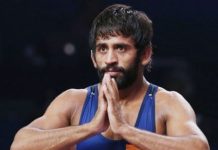
From 1988, Satpal began coaching at Chhatrasal Stadium in Delhi alongside fellow coach Virender Singh, turning it into the foremost wrestling academy in the country. Under his guidance, Sushil Kumar won bronze at the 2008 Beijing Olympics and silver at the 2012 London Olympics, becoming independent India’s most decorated individual Olympian at the time, and Ravi Kumar Dahiya went on to win an Olympic silver medal of his own at Tokyo in 2021. Satpal’s decades of coaching work at Chhatrasal helped establish Delhi as one of the country’s leading centres of wrestling, feeding a generation of wrestlers into the national team and giving many of them the same disciplined grounding he himself had once received at the Hanuman Akhara.
Later recognition and life
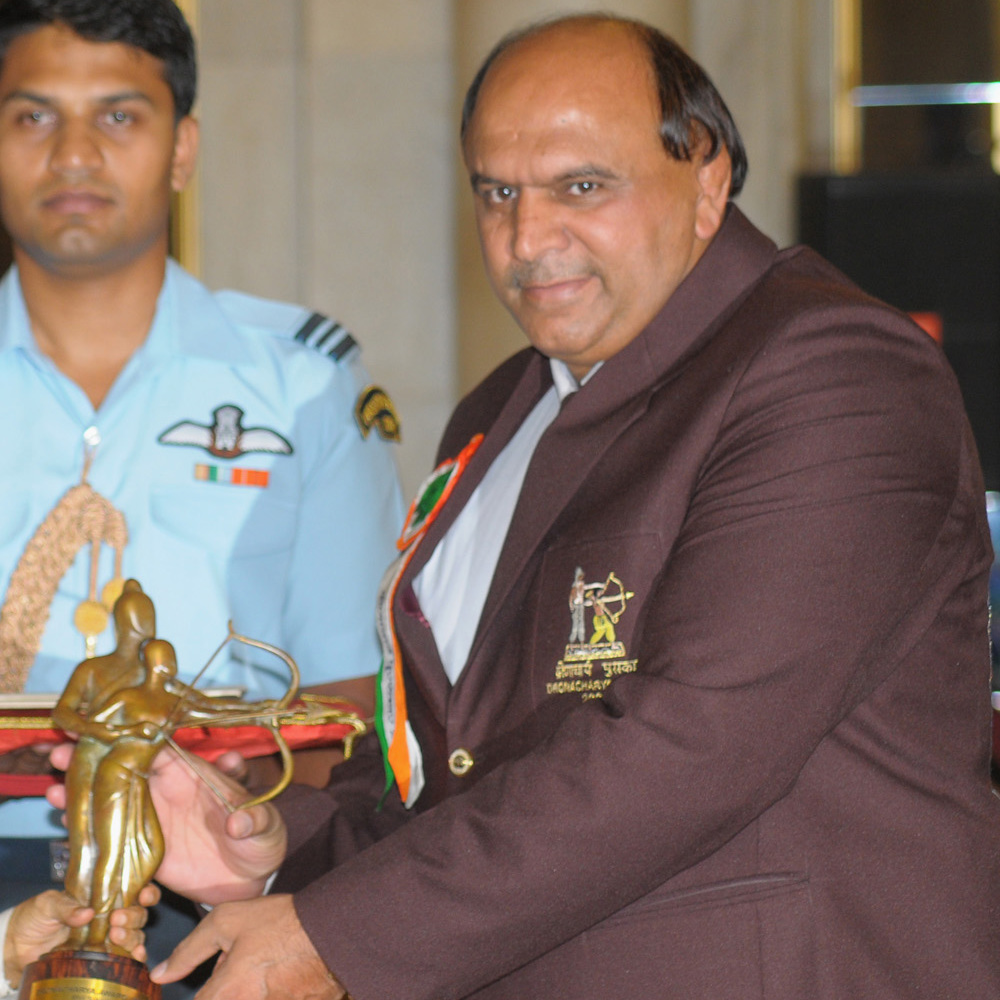
Satpal’s coaching was honoured with the Dronacharya Award in 2009, and in 2015 he received the Padma Bhushan, one of India’s highest civilian honours, in recognition of a career that had spanned both competing and coaching at the highest level. He has also served as assistant director of education for Delhi and as chief patron of the School Games Federation of India, continuing his association with sport administration well after his own wrestling days ended, and remains a familiar and respected figure at Chhatrasal Stadium to this day.
Achievements and awards
Gold medallist, 1982 Asian Games, New Delhi; silver medallist, 1978 Asian Games, Bangkok; bronze medallist, 1974 Asian Games, Tehran; silver medallist, Commonwealth Games, 1974, 1978 and 1982; competed at the 1972 Munich and 1980 Moscow Olympics; Arjuna Award, 1974; Padma Shri, 1983; Dronacharya Award, 2009; Padma Bhushan, 2015; coach to Olympic medallists Sushil Kumar and Ravi Kumar Dahiya.
Photo: Wikimedia Commons