
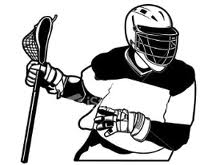
Lacrosse began among Indigenous peoples in North America centuries before it was written into a rulebook, and it is now overseen worldwide by World Lacrosse. Played with a long stick that has a webbed pocket at the end, the sport combines the running and passing of football with the stick skills of hockey, and it comes in a few different versions with their own rules.
Objective
Two teams try to use their sticks to catch, carry and pass a small rubber ball, aiming to shoot it into the opponent’s goal more times than the other side.
Rules and regulations
- The traditional outdoor game, field lacrosse, is played over four 15-minute quarters, with 10 players a side in the men’s game.
- The women’s version uses broadly similar principles but with different rules on contact and equipment.
- Players carry the ball in the stick’s pocket rather than their hands, and can pass, catch or scoop it off the ground; only the goalkeeper may touch the ball with their hands, and only inside a marked crease around the goal.
- Men’s lacrosse allows body checking and stick checking within set limits, while the women’s game restricts physical contact far more heavily and instead relies on positioning and stick skills to dispossess an opponent.
- World Lacrosse has also developed a faster six-a-side format, known as Sixes, played on a smaller pitch over shorter periods, which is set to feature at the 2028 Olympics in Los Angeles.
Equipment and playing area
- A field lacrosse pitch is around 100 metres long and 55 metres wide, with a goal at each end measuring six feet square.
- Sticks vary in length depending on position: attacking players use shorter sticks for close control, while defenders use longer ones to extend their reach.
- Men wear helmets, gloves and padding because of the permitted contact; women traditionally wear less protective equipment, though eyewear and, increasingly, headgear are now required in many competitions.
- The ball itself is solid rubber, a little smaller than a tennis ball.
Scoring
- A goal is scored when the whole ball crosses the goal line into the net.
- Goals count equally regardless of how they are created, and the team with more goals when time runs out wins; tied matches are usually settled by extra time under most competition rules.