
The scene could have been lifted straight from the Oscar-winning Ben-Hur. The difference is that the film was reel and this is real. The protagonists have changed too. Instead of horses there are bullocks, the chariots give way to bullock carts and the celebrated charioteers are replaced by ordinary drivers, but the race is as exhilarating and gripping as the climax of William Wyler’s 1959 classic.
This is one of the many thrilling sporting spectacles testing human physical endurance that are on display for the thousands of spectators who throng Kila Raipur village (Ludhiana) from all over the region during the three-day sporting festival, also known as the Rural Olympics.
The Kila Raipur Games, organised by the Grewal Sports Association, are now world famous. The three-day festival, usually held in February, displays the spirit of Punjab, the land of grime, guts and glory.
Sport and spectacle
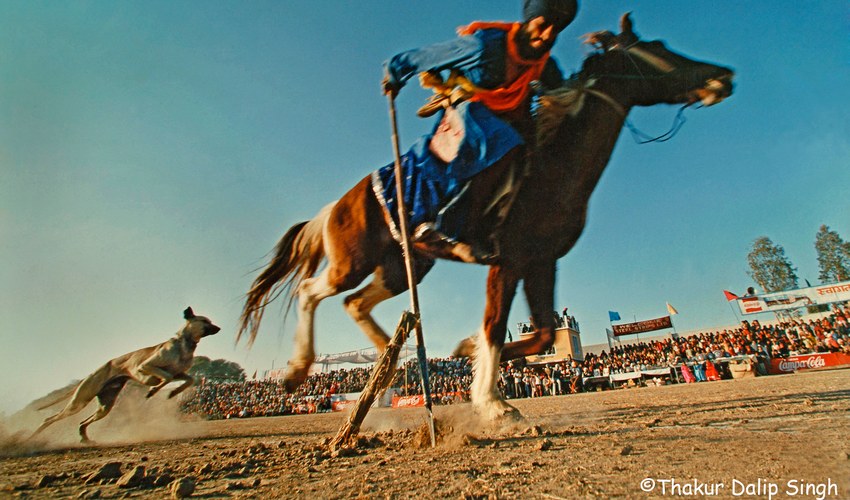
The Games are a mixture of sporting disciplines and other unusual pursuits that add up to nothing less than a carnival. There is a bullock cart race, tent pegging, Nihangs galloping on two horses at the same time, a tractor loaded with people rolling over a brave man, and a man running with a 50kg plough held between his teeth. It is an unusual display of daredevilry. Unbelievable, but amazing! Add to that track and field events, cycle races, hockey and crowd-pulling events like tug-of-war and kabaddi, and the festival becomes a spectacular treat for the eyes. Here age hardly matters. An 80-year-old is as passionate as an 18-year-old, and they test their talent on an equal footing. It is not only about winning but about the pleasure of taking part.
Every evening the spectators are treated to folk dancers and singers, and they stay back for the entertainment in store for them. Top folk singers and bhangra and giddha artists entertain the crowd until well past midnight.
Here one gets to see it all in one go, and, mind you, at no cost.
Keeping tradition alive
Speaking about the festival, Sukhvir Singh Grewal, chief organiser of the committee, said the rural sports helped keep culture and tradition alive. “It also encourages youngsters to take up sport. The main purpose is to keep the traditional events alive. Through the cultural programmes, we want to show the culture of Punjab to the world. We also want to show these sports to youngsters so that they take up sport. Sport is a very important part of our lives and we want people to take it up,” he said.
“Our effort has also been to blend the traditional with the modern. Way back in the early 1930s, when we introduced the Bhagwant Gold Cup hockey tournament, stars like the hockey wizard Dhyan Chand came to Kila Raipur. Many Olympians have been a part of the Games. Modern sports like shooting, wrestling on synthetic mats, track and field, hockey and cycling have become an integral part of our Rural Olympics,” he added.
“In over seven decades the festival has grown from a toddler into a prancing, energetic youthful organisation. This pioneering rural sports festival has become an annual international event, normally held in the first weekend of February. The association has received 3,000 entries from different regions for different events in different age categories,” he said, adding that the prize money this year is Rs 15 lakh.
“From time to time the government provides us with funds for infrastructure development, but it is mainly our sponsors who provide the money to organise such a massive event,” added the chief organiser.
An example of voluntary effort
Apart from the unusual display of daredevilry, there is something else unique about the Kila Raipur Games. They are an example of community service: the whole mega event is organised through voluntary effort, with the villagers contributing material and money to make the festival a success.
The Games are organised through the combined effort of the organisers and the village people. Contributions range from money to small items like milk, ghee, vegetables, pulses, atta, rice or even fuel for the community kitchen, which runs round the clock.
According to chief organiser Sukhvir Grewal, “The actual budget can be anywhere around four to five times the money spent by the organising committee. But the effort and consideration of the villagers help us run the Games smoothly year after year. The villagers seldom seek any financial or administrative support for holding these Games. The langar is open during the three days and food is served to participants and spectators alike.”
The villagers not only donate material and money but also turn up in person to prepare food for the langar, which saves the organisers a lot of money. “Of late, financial help has started pouring in from non-resident Indians who make it a point to be in Punjab during the melas in their areas,” adds Grewal.
By Akshi Aggarwal
Indian Sports News