
Even in 2016, sport is considered a field associated with men and masculinity. Although women take part in major tournaments across the world, they are seen as playing the supporting role in a blockbuster movie. Make no mistake: the protagonists of any major sporting event are always considered to be men, especially in the Indian context.
Whenever we talk about a sport, say cricket, the heroes of the game, be it (Virat) Kohli, (Rohit) Sharma or (MS) Dhoni, come to mind more often than not, and we forget the heroines. Why else are Jhulan Goswami and Mithali Raj not the household names they should be? When two people play the same sport for the same nation at the same level, why is one watched and liked by spectators more than the other? It cannot be called a coincidence, because the story is the same in every other sport in India.
The story does not end there. There is a wide gap in income between players of the same sport representing the same nation but of different genders. There is no comparison at all. The reason given for this pay inequality by members of the boards and institutions concerned is that women’s sport in general attracts fewer spectators and therefore less revenue, which leaves them no option but to cut the players’ wages. The media take a lot of the blame for this trend; however, even as media coverage has increased, spectator numbers have remained dramatically low compared with men’s sport.
Intensity is what women’s sport lacks. Accepting that there are physical differences between a male athlete’s body and a female athlete’s body does not solve the problem for us. Be it pace, power, stamina or athleticism, men’s sport is a long way ahead of women’s sport in all these respects. And because women’s sport is less intense and less competitive, far fewer people turn up to watch the matches or even tune in on television.
One of the key reasons, I feel, is that because sport has been male-dominated since its origins, the parameters used to measure sporting performance suit male performers. All the parameters, be it power, pace and so on, favour men. Asking women to produce intense competition on parameters that favour men is a little unfair on them. Had the parameters favoured women, say flexibility or grace, sport would certainly have been understood in an entirely different way.
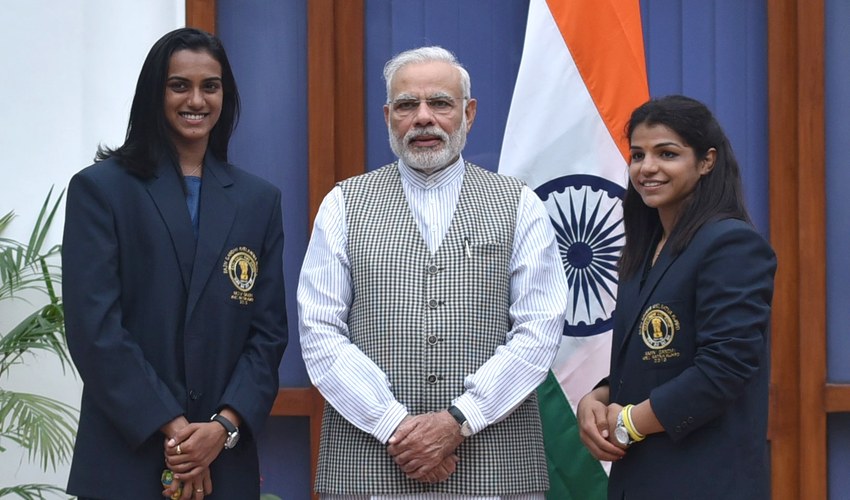
That is why a sport like gymnastics has outstanding women athletes, who surpass even the best men in that sport because of its parameters. At the moment, asking for equal pay for women may be too much, but society needs to embrace its women sportspersons and acknowledge that they are stars too. Gone are the days when women were considered only the mistresses of domesticity. When the entire male contingent disappoints, amid that disappointment there is someone like PV Sindhu or Sakshi Malik who makes our nation proud. We must not, intentionally or unintentionally, become a hindrance to producing more women sportspersons.
By Saurabh Ganguly
Indian Sports News