
Subimal “Chuni” Goswami captained India to the football gold at the 1962 Asian Games in Jakarta, the high point of the national team’s history. A forward who never played for any senior club other than Mohun Bagan, he scored goals by the hundred in Calcutta and then, almost as an afterthought, captained Bengal in a Ranji Trophy final.
Name: Subimal “Chuni” Goswami | Born: 15 January 1938, Kishoreganj (now in Bangladesh) | Died: 30 April 2020, Kolkata | Sport: Football and cricket | Position: Forward
A Mohun Bagan man from boyhood
Goswami was born in Kishoreganj in what was then the Bengal Presidency. He joined Mohun Bagan’s junior set-up in 1946 as a boy and moved into the senior team in 1954. He stayed until he retired in 1968 and never played for another senior club. There was a reported offer from Tottenham Hotspur, but he remained in Calcutta.
His numbers for the club are remarkable: 326 goals in 296 matches by the club’s own count, and 145 goals in the Calcutta Football League, the most anyone has scored in the competition. He captained Mohun Bagan from 1960 to 1964 and won the Calcutta League, the IFA Shield and the Durand Cup several times over.
Into the India team
Goswami made his India debut in 1956 against the Chinese Olympic team, a 1-0 win. He was part of the squad at the Rome Olympics in 1960, where India played in a group with Hungary, France and Peru. Over the next decade he played more than 30 full internationals for India, usually as the man leading the attack.
Jakarta 1962
The 1962 Asian Games in Jakarta were the peak. Under coach Syed Abdul Rahim, and with Goswami as captain, India won the gold medal, beating South Korea 2-1 in the final. It is still India’s most recent Asian Games football gold. Goswami was named the best striker in Asia that year and received the Arjuna Award in 1963.
Tel Aviv and Kuala Lumpur
Two years later he led India to second place at the 1964 AFC Asian Cup in Tel Aviv, still the national team’s best finish in the competition. The same year India were runners-up at the Merdeka Tournament in Malaysia. He kept playing for Mohun Bagan until 1968, retiring when he was 30.
A first-class cricketer too
Goswami was also good enough at cricket to play 46 first-class matches. He made his debut for Bengal in the 1962-63 season and was a useful all-rounder, scoring 1,592 runs with one century and seven fifties and taking 47 wickets. In the 1968-69 Ranji Trophy final against Bombay he scored 96 and 84, though Bengal lost. He captained Bengal in the 1971-72 final, again against Bombay, and again finished on the losing side.
One more match stands out. In December 1966, playing for a combined East and Central Zone side against the touring West Indies, he took eight wickets in the match.
After the playing days
Goswami stayed close to the game. He was director of the Tata Football Academy from 1986 to 1989 and managed the India team between 1991 and 1995. In 2005 he was elected Sheriff of Kolkata, a ceremonial post in the city.
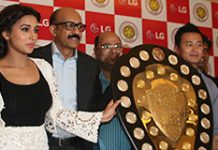
He received the Padma Shri in 1983, and Mohun Bagan made him one of the recipients of the Mohun Bagan Ratna. West Bengal gave him the Banga Bibhushan in 2013. He died in Kolkata on 30 April 2020 after a cardiac arrest, aged 82.
How he is remembered
To older Kolkata fans Goswami was the “Golden Boy” of Indian football, and the description has stuck. Few Indian footballers have combined club loyalty, national captaincy and an international title in the way he did. He was also one of very few Indians to captain a national team in one sport and a state side in a Ranji Trophy final in another.
Career record and honours
- Asian Games: gold, Jakarta 1962 (captain)
- AFC Asian Cup: runner-up, Tel Aviv 1964 (captain)
- Merdeka Tournament: runner-up, 1964
- Olympic Games: Rome 1960
- Mohun Bagan: senior player 1954-1968, captain 1960-1964; record 145 goals in the Calcutta Football League
- Ranji Trophy: finalist with Bengal 1968-69 and 1971-72 (captain)
- First-class cricket: 46 matches, 1,592 runs, 47 wickets
- Best striker in Asia (1962)
- Arjuna Award (1963)
- Padma Shri (1983)
- Mohun Bagan Ratna
- Banga Bibhushan (2013)