

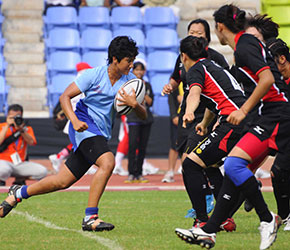
Think of rugby and the first thing that comes to mind is raw aggression, with beefy men clashing for possession of the ball. It’s a game meant for the tough. And for us Indians, who eat, sleep and talk cricket, rugby is a sport more often seen on TV than played on the ground.
So when one sees women fighting for the ball and displaying raw power on the field, it does come as a surprise. Not any more, though. Things are changing, and the sport is gaining a considerable following among girls back home. Though still in its infancy, it is attracting girls from other sports who are ready to try their hand at a game considered a male bastion.
Women’s rugby in India started some four years ago by bringing together players from other sports to form a team, and there has been no looking back since. Most of India’s women rugby players come from different sporting backgrounds and were previously into football, wrestling, kabaddi, boxing or other power sports.
“I was in Class 10 and was already into wrestling and handball at school. But destiny had something else in store, as one of the state rugby coaches, Surhud Khare, came to promote the sport at our school and introduced me to the game. Initially I was a little hesitant, but then I thought of giving it a try. After that I was hooked. Now it’s been three to four years that I have been playing the sport. It started with very few girls, but now the numbers have grown considerably,” recalls Vahbiz Bharucha. But she adds that a lot needs to be done to promote the sport in the country.
“It’s sad that the mindset of most people in India is cricket-oriented. We have the potential to win medals in international tournaments, but that cannot happen without the support of the authorities concerned and the government. Our basic need is the availability of grounds, the lack of which often hinders our training sessions,” says Vahbiz, who plays for Pune and has been part of the Indian team since 2009.
The Pune players also complain that the very name ‘rugby’ makes it hard for them to get grounds. “Whenever we go and seek permission to use a ground, people have ready-made excuses to turn us down. They think it is a sport that will spoil their ground,” adds Vahbiz.
But with time, the sport is winning favour among sports lovers, and there has been a fair addition to the infrastructure. The first Indian women’s rugby team was formed in 2009, when it took part in the Asia Women’s Rugby 7s tournament. Since then, the women’s team has been a regular at international tournaments. The team is currently ranked 13th in Asia out of 27 participating countries and 75th in the world. That is remarkable, considering their plight and their numbers.
“Some three to four years ago, there were no more than 10-15 girls who would willingly take part in the state and other championships. The craze has grown, and now a large number are coming forward to play for the team. Still, a lot needs to be done to promote the sport throughout the country,” says Niharika Bal, who plays for Pune and India.
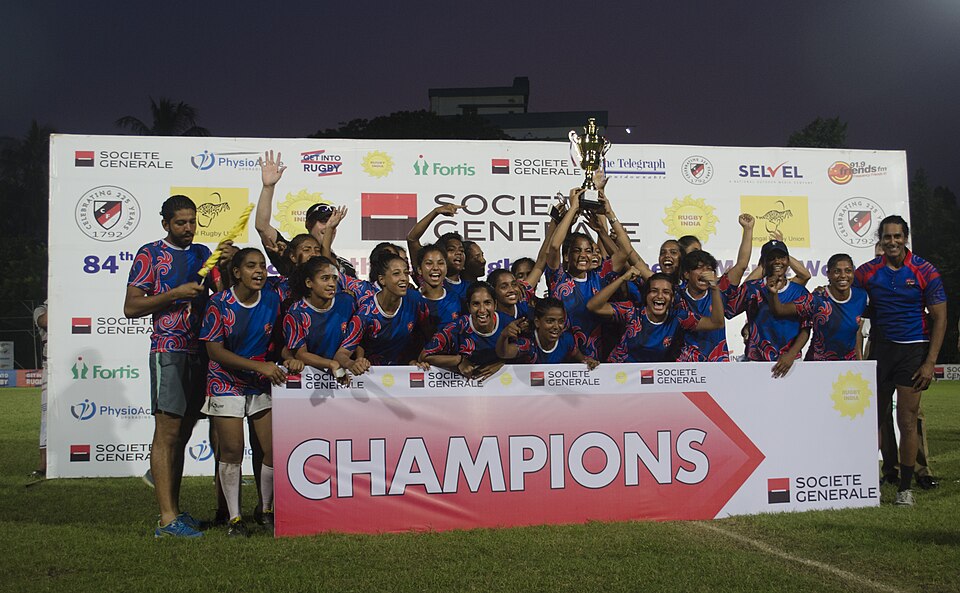
Standing in the way of the sport’s popularity in India are people’s preconceived notions about it. They think of it as a fierce, rather manly sport in which you bash and throw people around. But the women who play the game see it as just another sport. “We really can’t change people’s thinking. It’s not just about bashing each other. The force, aggression and strength associated with it are common to all sports. It’s a lot more fun,” says Priyanka Mondal, a former athlete who plays for Jungle Crows (Kolkata) but is currently resting because of injuries.
The growing popularity of the sport among women is borne out by the fact that the number of teams taking part in this year’s national championships has gone up to 20, divided into two divisions. At the national championships in Pune this week, teams from Bhubaneswar, Jammu and Kashmir, Kerala, Rajasthan and Bihar will rub shoulders with champion sides such as Pune and Maharashtra. Rugby was initially confined to the metros, but now teams from various parts of the country, including Orissa, Bihar, Rajasthan and Jammu and Kashmir, take part.
“Coming from a state like Jammu and Kashmir, where most people want girls to go into conventional, stereotypical jobs, it is an even bigger challenge to play the game and promote it further. I have been in the sport for the last four years, and now I coach the women’s team along with the chief coach, Irfan Aziz. It all started with a bunk in college. I was on the ground, and a coach was there to introduce the game. Initially I found it a bit unusual, but later I started liking it. At the moment, there are about 300-400 girls in Jammu and Kashmir who play rugby, and that is more than the number of men playing in the state. It is sad that our country is so obsessed with cricket,” says Solilah Yousuf, who plays for J&K Belmount.
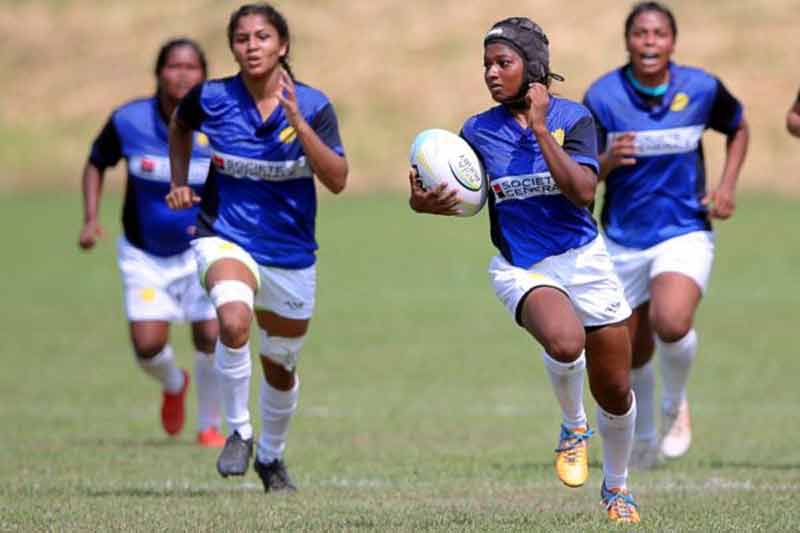
Surabhi Date, captain of last year’s Indian team, has a story too. Having played tennis and football since childhood, she joined KFANDRA (now RFS), a Pune-based rugby and football academy headed by rugby coach Surhud Khare, in Class 9, and that was where it all began. “I got into this sport through the academy. Now there is no football or any other sport for me except rugby. The sport is very popular in Mumbai, Pune and Kolkata. In fact, the national team usually features more than five players from Pune. There have been a number of rugby promotional workshops in Pune in the last two years. The sport is still developing, but in the coming years it will undergo a massive transformation,” says Surabhi.
However, if women’s rugby is to grow, it needs government support, a massive promotional drive and a change in people’s mindset.
By Akshi Aggarwal
Indian Sports News