
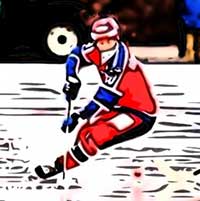
Bandy is a team sport played on ice with curved sticks and a small ball, and it owes more to football than to ice hockey in the way it is set up. Two teams of eleven players each try to hit the ball into the opponent’s goal, on a rink far larger than the one used for hockey.
Objective
The objective is straightforward: score more goals than the opposing team by striking the ball into their net with a stick, without using your hands.
Rules and regulations
- The Federation of International Bandy is the sport’s world governing body and sets the playing rules used in international competition, including the men’s and women’s world championships.
- A match is split into two halves of 45 minutes, much like football, and an offside law applies in a similar way to keep attackers from camping near the opposition goal.
- Only the goalkeeper may handle the ball, and only inside their own penalty area.
- Fouls are punished with free strokes, and more serious offences committed in the penalty area can lead to a penalty shot.
- Substitutions are permitted throughout the game, and matches are traditionally played outdoors on natural ice, though some are now staged in covered arenas because of unreliable winter weather.
Equipment and playing area
- A bandy rink is roughly the size of a football pitch, generally around 100 to 110 metres long and up to 65 metres wide, which is what gives the game its open, flowing style compared with ice hockey.
- The ball is small, hard and brightly coloured, usually orange or cerise, so it stands out against the ice.
- Sticks are curved and shorter than an ice hockey stick, traditionally made of wood though composite versions are now common, and players wear speed-skate style skates rather than hockey skates.
Scoring
- Each goal counts as one point, and the side with more goals when the final whistle sounds wins the match.
- League games can end in draws, while knockout fixtures that are level after normal time typically move to extra time to produce a winner.
- Bandy has a small but long-standing following in countries such as Russia, Sweden, Finland and Norway, where cold winters make outdoor ice rinks practical, and it has never developed a significant presence in India.