
By Rakesh Jha
New Delhi: India closed its campaign at the 2026 Asian Games in Aichi-Nagoya, Japan, in fourth place on the medal table, finishing behind China, Japan, and South Korea. The final tally of 85 medals—21 gold, 27 silver, and 37 bronze—represents an outright drop from the record haul of 107 medals achieved at Hangzhou 2023. Evaluating this performance solely through the lens of gross totals, however, overlooks the shifting structural dynamics within Indian Olympic disciplines.
While Hangzhou was defined by an unprecedented rush of silverware across non-Olympic and niche events, Aichi-Nagoya told a different story. The 2026 campaign was marked by qualitative consolidation in core Olympic codes, direct qualifications for the Los Angeles 2028 Games, and the emergence of teenage prospects who bypassed domestic transition phases to win on the continental stage. At the same time, it laid bare persistent shortcomings in converting podium contention into gold, particularly in blue-riband disciplines like track and field.
The Olympic Core: Hockey Double and Recurve Breakthrough
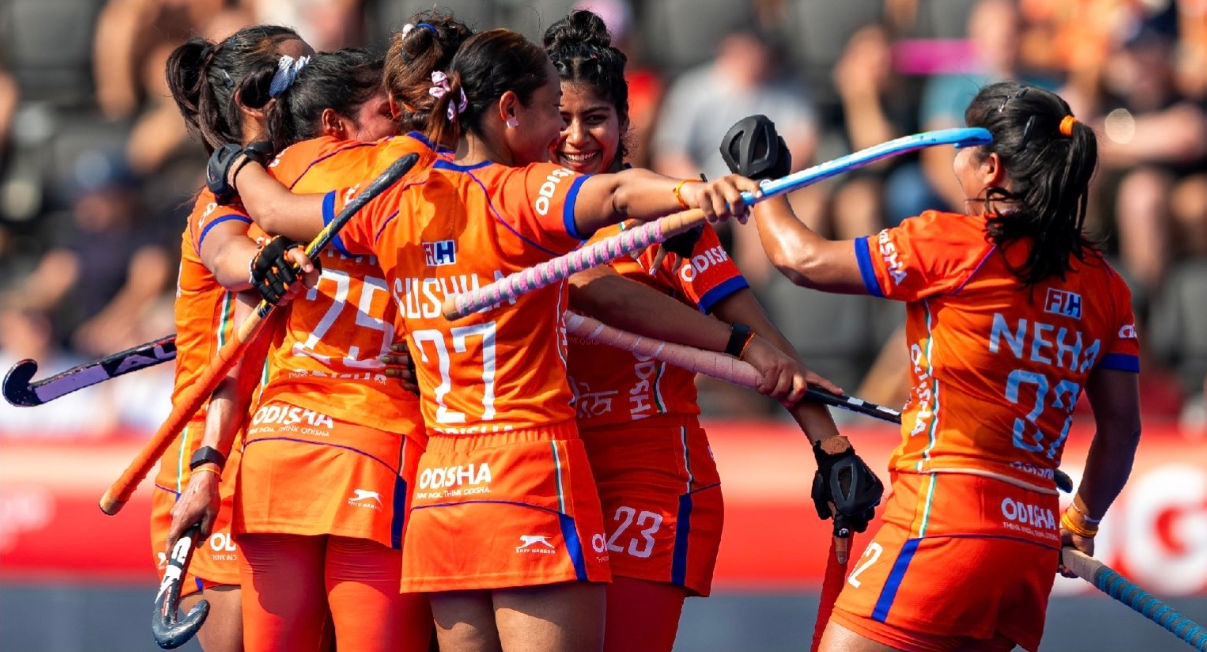
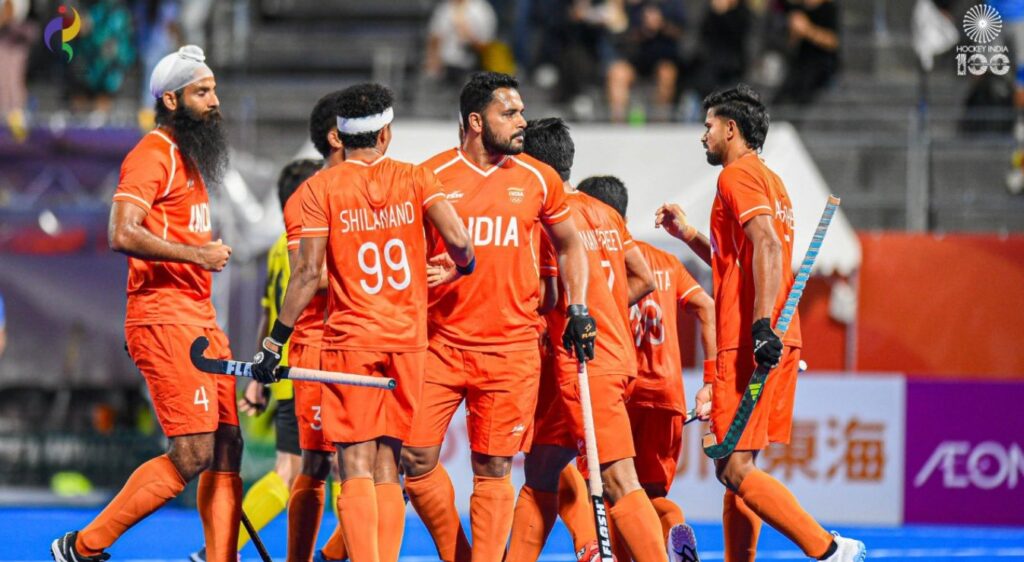
The defining high point of India’s campaign came on the hockey turf. For the first time at a single Asian Games edition, India secured both the men’s and women’s hockey titles. The men’s side mounted a successful title defence, while the women’s team claimed their first Asian Games gold medal in 44 years. Beyond continental supremacy, both squads secured direct qualification for the Los Angeles 2028 Olympic Games, eliminating the precarious qualification cycles that have disrupted previous campaigns.
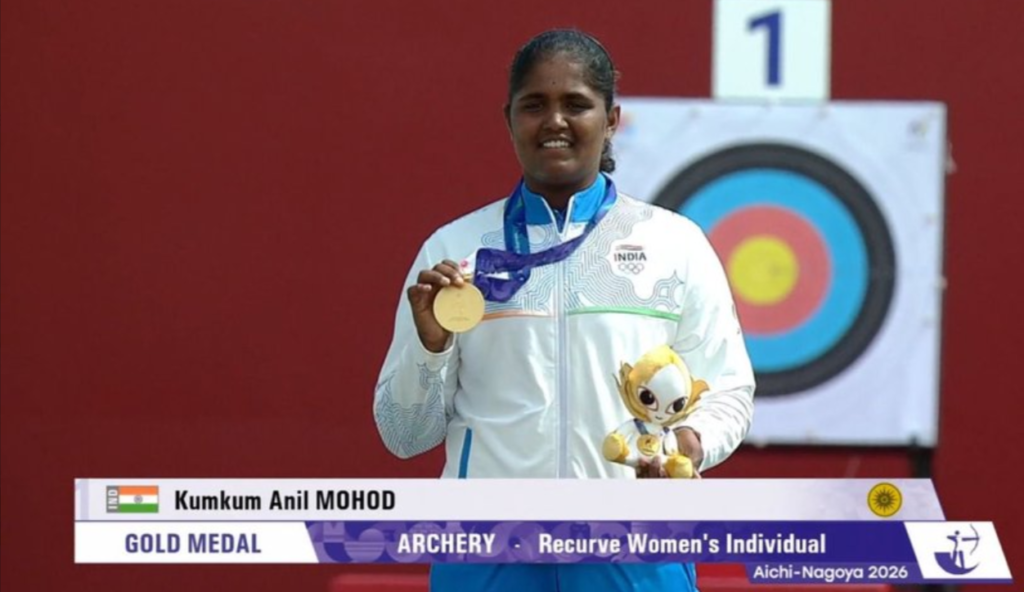
Archery provided a significant technical breakthrough. Historically reliant on the non-Olympic compound discipline for major international honours, India claimed five gold medals out of nine total archery medals in Aichi-Nagoya. Crucially, 17-year-old Kumkum Mohod took gold in individual women’s recurve, becoming India’s first individual recurve Asian Games champion. Because recurve remains the sole archery format contested at the Olympic Games, Mohod’s triumph provides an encouraging marker ahead of LA 2028.
Combat sports added substance to the gold tally. Indian boxers finished atop the boxing medal table with three golds and three bronzes, delivering the nation’s finest Asian Games return in terms of titles won. Wrestling recorded a resurgence of its own, collecting two golds, two silvers, and two bronzes. This six-medal haul marked the sport’s most productive Asian Games performance since Jakarta 1962, reaffirming its place as a traditional anchor in India’s Olympic medal prospects.
Shifting Demographics and Expanding Frontiers
The Aichi-Nagoya Games highlighted a noticeable widening of India’s competitive base across individual disciplines. On the golf course, Pranavi Urs produced an assured four rounds to become the first Indian woman to win an individual golf gold at an Asian Games. Urs’ victory, alongside Mohod’s archery title and the women’s hockey triumph, underlined the expanding role of women athletes in driving India’s top-tier success.
Altogether, India earned podium places across 21 distinct sporting disciplines. Shooting once again delivered volume with 15 medals, while combat codes, archery, and golf provided the winning margins that kept the nation inside the top four in Asia. The arrival of young champions also signals a healthier generational transition, building an athlete pipeline that is beginning to rely less on established, solitary figures.
Athletics: Depth Over Gold Conversion
Track and field offered a complex, mixed picture. India slipped from third place on the Hangzhou athletics table to sixth in Aichi-Nagoya, taking 24 medals—one gold, nine silver, and 14 bronze—compared to the 29 medals (six gold, 14 silver, nine bronze) won in 2023.
This drop in gold medals, however, was partly offset by improving baseline standards. Several Indian competitors registered national-record-level marks, showing that overall athletic conditioning had not regressed despite stiffer competition. Vithya Ramraj stood out with three medals, clocking a national record of 54.75 seconds in the 400m hurdles and anchoring the women’s 4x400m relay squad to India’s lone athletics gold. Gulveer Singh mounted a remarkable distance campaign, earning three individual medals: silvers in the 1,500m and 10,000m alongside a bronze in the 5,000m.

Field events also yielded fresh returns. Baranica Elangovan secured India’s first Asian Games women’s pole-vault medal, and Pooja Singh won bronze in the women’s high jump to end a long continental medal drought. In the men’s javelin, held without the injured Neeraj Chopra, Yashvir Singh threw 85.72m for silver and Rohit Yadav recorded 84.35m for bronze.
Yet the central challenge remains conversion. While Indian athletes reached finals and podiums in greater numbers across technical field and endurance events, their ability to convert silver and bronze positions into gold at the Asian level declined sharply.
| Category / Metric | Hangzhou 2023 | Aichi-Nagoya 2026 |
|---|---|---|
| Total Medals | 107 | 85 |
| Gold Medals | 28 | 21 |
| Silver Medals | 38 | 27 |
| Bronze Medals | 41 | 37 |
| Overall Standing | 4th | 4th |
| Sports Delivering Medals | 22 | 21 |
| Athletics Medals (G-S-B) | 29 (6-14-9) | 24 (1-9-14) |
| Athletics Continental Rank | 3rd | 6th |
| Shooting Medals | 22 | 15 |
| Hockey Results | Men: Gold | Women: Bronze | Men: Gold | Women: Gold |
| Recurve Archery Gold | None (Compound sweep) | 1 Individual Gold (Women’s) |
The Road to Los Angeles 2028
The dip in total medals from 107 to 85 is an inevitable talking point, but continental aggregates can be deceptive when assessing Olympic viability. A heavy volume of medals won against limited Asian fields does not automatically translate into global podium contention.
From an Olympic viewpoint, Aichi-Nagoya offered clear structural gains: early qualification for both hockey teams, a viable individual recurve archer, a table-topping boxing contingent, and genuine depth in men’s javelin throwing well beyond 84 metres.
Conversely, the warning flags are clear. Shooting’s lower yield compared to Hangzhou, the drop in athletics golds, and a completely medal-free badminton campaign show areas where elite preparations fell short of expectations. National records and Asian silvers provide a respectable foundation, but closing the technical and tactical deficit to reach world and Olympic medal marks remains the real work ahead for Indian sport over the next two years.