Roop Singh played inside left for India at two Olympic Games and came home with gold from both. At Los Angeles in 1932 he scored 13 goals in two matches, one more than his elder brother Dhyan Chand. Four years later in Berlin he scored the first goal of the final against Germany. The Second World War ended his international career early, and for years afterwards more people knew his name from a Gwalior cricket ground than from hockey’s record books.
Name: Roop Singh
Born: 8 September 1908, Jabalpur
Died: 16 December 1977, Gwalior
Sport: Hockey
Position: Inside left
Early life in Jhansi and Gwalior
Roop Singh was born in Jabalpur on 8 September 1908. His father, Subedar Sameshwar Dutt Singh, was an army man, and the family later settled in Gwalior. Roop was three years younger than Dhyan Chand.
He was largely self-taught and picked up the game in Jhansi. Whenever his brother talked about hockey, Roop would sit and listen, and when the two played together Dhyan Chand would correct his technique. As a young man he joined the army of the Scindia rulers of Gwalior, and he made his name in service hockey.
He stood six feet tall and hit the ball very hard. Dhyan Chand later said Roop was the only inside left he had seen who could score from crosses sent over by the outside left, and his penalty-corner hits carried real power. Accounts of the period also credit him with making the backhand shot and pass a regular part of his game at a time when few forwards used them.
Los Angeles 1932: 13 goals in two matches
Only three teams entered the hockey tournament at the 1932 Olympics: India, Japan and the United States. India beat Japan 11-1, with Roop Singh scoring three, and then beat the hosts 24-1. He scored ten goals in that match, which is still the highest-scoring game in Olympic hockey.
His 13 goals put him one ahead of Dhyan Chand, who finished with 12. India scored 35 goals in the tournament and conceded two. Before the Games, Dhyan Chand had told people that Roop was a better player than him. The Los Angeles scoresheet backed him up.
Delhi 1934 and the road to Berlin
Roop Singh won another team gold at the 1934 Western Asiatic Games in Delhi. By 1936 he was a senior member of the squad that travelled to Berlin with Dhyan Chand as captain.
The build-up in Germany went badly. India lost a warm-up match to the hosts 4-1, and there was real worry in the camp. When the two sides met again in the final on 15 August 1936, Roop Singh broke the deadlock and India went on to win 8-1. It was India’s third Olympic hockey gold in a row and his second.
Remembered in Germany and London
Germany did not forget the Berlin final. A street was named after him following the 1936 Games, and when Munich hosted the 1972 Olympics a street in the Olympic Park there was given his name. The German Olympic Committee sent him a map showing it.
In 2012, ahead of the London Olympics, he was one of three Indian hockey players, along with Dhyan Chand and Leslie Claudius, to have a station named after them on a special London Underground map of Olympic greats.
War, a short career and hard years
The war wiped out the 1940 and 1944 Olympics, and Roop Singh never got a third Games. He later worked on the personal staff of Maharaja Jiwajirao Scindia in Gwalior. He was a good all-round sportsman and also played golf, tennis and cricket.
His later years were hard. He had 12 children, money was short, and hockey historians who have written about him say he got little help from the game’s administrators. He died in Gwalior on 16 December 1977, aged 69.
The family’s hockey line carried on. His son Bhagat Singh and his grandson Uday Singh both played hockey for India.
The Captain Roop Singh Stadium
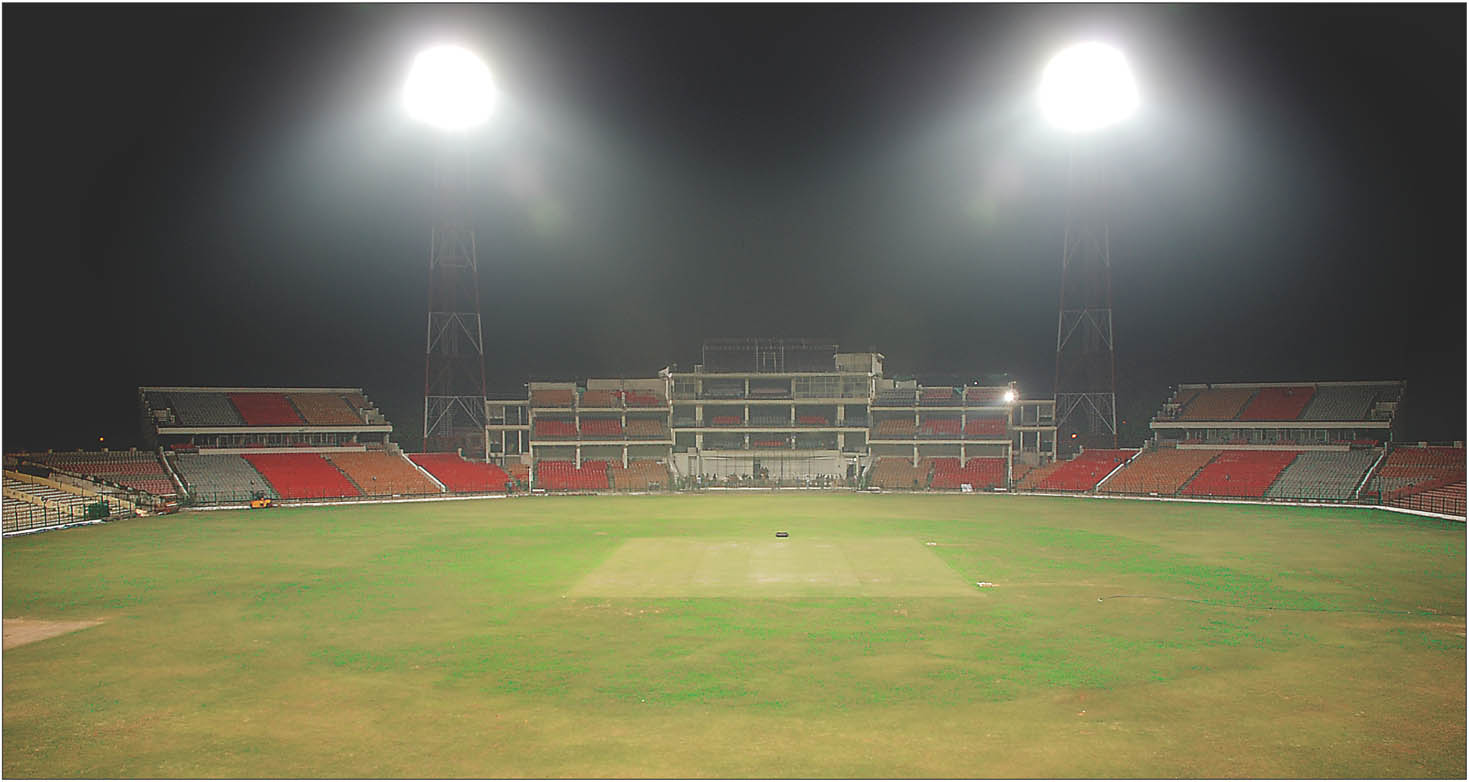
A year after his death, Gwalior opened a stadium in his name. It was built for hockey but was handed over to cricket within ten years, and it staged its first one-day international in January 1988, when West Indies beat India by 73 runs. The ground holds about 18,000 people and belongs to the Madhya Pradesh Cricket Association. On 24 February 2010 Sachin Tendulkar scored 200 not out against South Africa there, the first double century in men’s one-day internationals. The name on the ground is still Roop Singh’s.
Career record and honours
- Olympic gold medal, Los Angeles 1932: 13 goals in two matches, including 10 in the 24-1 win over the USA
- Olympic gold medal, Berlin 1936: scored the opening goal in the 8-1 final win over Germany
- Gold medal, Western Asiatic Games, Delhi 1934
- Captain Roop Singh Stadium, Gwalior, named after him (1978)
- Street named after him in the Olympic Park, Munich (1972)
- Named on the London Underground Olympic Legends map (2012)
Featured photo: Captain Roop Singh Stadium, Gwalior. Wikimedia Commons