Name: Prakash Padukone
Born: 10 June 1955, Bangalore
State: Karnataka
Sport: Badminton
Early life
Prakash Padukone was born on 10 June 1955 in Bangalore, into a family already steeped in the sport: his father, Ramesh Padukone, was himself a badminton player and served as secretary of the Mysore Badminton Association. Prakash took his first lessons from his father and played his first tournament at the age of seven, though his first official outing, the Karnataka state junior championship in 1962, ended in a first-round defeat. He kept at it through his school and college years in Bangalore, gradually building the all-round game that would take him to the top of world badminton, at a time when Indian badminton had produced no player of genuine international standing.
Building a national dominance
Padukone adopted a sharper, far more attacking style of play in the early 1970s, and the change paid off quickly: he won both the junior and senior national titles in 1972, while still a teenager, and went on to hold the senior national championship for seven consecutive years, a run of domestic dominance that has rarely been matched in Indian badminton.
All England and the world number one ranking
Padukone’s international breakthrough came at the 1978 Commonwealth Games in Edmonton, where he won the gold medal. He won the Danish Open in 1979, and then, in 1980, produced the result that defined his career: he became the first Indian to win the men’s singles title at the All England Championship, then regarded as the unofficial world championship of badminton, beating Indonesia’s Liem Swie King in the final. The same year he also won the Swedish Open and rose to the world number one ranking, a position no Indian shuttler had held before him. In 1981 he added the World Cup title in Kuala Lumpur, and in 1983 he reached the semi-finals of the World Championships, finishing with a bronze medal, results that together marked the peak years of his playing career.
Retirement and a second career building the sport
Padukone retired from competitive badminton in 1991 and turned his attention to developing the game in India. He served for a period as chairman of the Badminton Association of India and coached the national team between 1993 and 1996, before setting up the Prakash Padukone Badminton Academy in Bangalore in 1994, along with fellow national champion Vimal Kumar, an academy that has since become one of the country’s leading badminton training centres and helped produce a new generation of Indian players, several of whom went on to represent the country internationally. He also co-founded Olympic Gold Quest with fellow former world champion Geet Sethi, a foundation that supports promising Indian athletes across several sports in their pursuit of Olympic medals.
Recognition and family
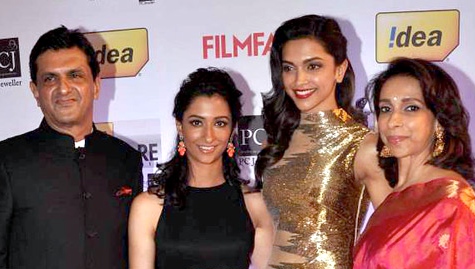
Padukone was honoured with the Arjuna Award in 1972 and the Padma Shri in 1982, in recognition of a career that had put Indian badminton on the world map for the first time and inspired the players who came after him. He is married to Ujjala, and the couple have two daughters, Deepika and Anisha; Deepika went on to become one of Hindi cinema’s leading actresses, though Prakash himself remains best known, and most respected, for what he achieved on the badminton court, as the man who first showed Indian shuttlers a world title was within reach.
Achievements and awards
All England Champion, 1980, the first Indian to win the title; World Cup champion, 1981; gold medallist, 1978 Commonwealth Games, Edmonton; bronze medallist, 1983 World Championships; world number one ranking, 1980; national champion for seven consecutive years; Arjuna Award, 1972; Padma Shri, 1982; founder, Prakash Padukone Badminton Academy; co-founder, Olympic Gold Quest.
Photo: Wikimedia Commons